
Quick answer
Tarifa whale watching season runs roughly April to October, with tours priced at 50 EUR for a two-hour trip. Pilot whales and common dolphins appear from spring, sperm whales through summer, and migrating orcas concentrate in July and August as they follow bluefin tuna. Winter sightings are possible, though boats sail less often.
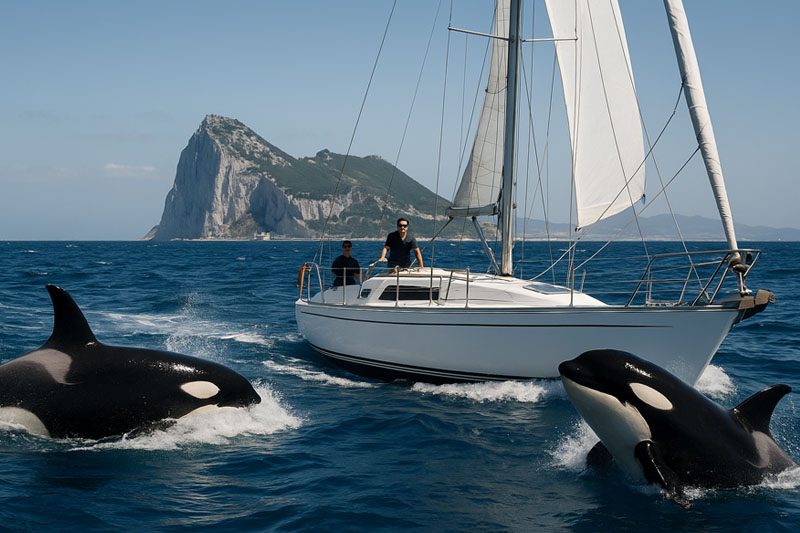
Few marine corridors pack the density of the Strait of Gibraltar, a roughly 14-kilometre pinch of water where the Atlantic and Mediterranean trade tides and several cetacean species share the same shipping lane. The narrowness is the point. Deep water funnels close to shore, and the animals that hunt it stay within reach of a small boat leaving Tarifa harbour. Understanding the tarifa whale watching season means reading a calendar written by prey. Common and striped dolphins hold the channel year-round, joined by bottlenose dolphins that shadow the ferries. Long-finned pilot whales settle in from spring, resident and reliable. Sperm whales move through the deep central trench during the warmer months, surfacing to breathe between long dives. The headline act arrives last: orcas track the bluefin tuna migration into the Strait in July and August, and a small pod has learned to intercept the fish near longline boats. This is why timing shapes expectations more than luck does. A visitor booking avistamiento de cetáceos en Tarifa in May meets a different cast than one arriving in August. The Camarinal Sill, an underwater ridge, stirs nutrients upward and keeps the food web churning, which is part of why the same waters hold both migratory giants and permanent residents. Fin whales pass on their own schedule, usually late summer, adding a second large species to the orca window. The practical takeaway is modest. A Tarifa whale watching tour sails from a compact old-town base, and morning departures tend to meet calmer water than afternoon ones. Species are wild, not staged, so operators describe recent sightings rather than guarantees. Anyone planning around a specific animal should match the visit to that animal's window: pilot whales and dolphins across the long season, sperm whales and orcas concentrated in high summer. Read against the wider tarifa whale watching season, the lesson is that the Strait rewards the informed more than the lucky. Knowing which month brings which species turns a hopeful boat ride into a targeted one. The migration is predictable enough to plan around, and specific enough that a week's difference can change what surfaces beside the hull.
“The Strait rewards the informed more than the lucky, and a week's difference can change what surfaces beside the hull.”
Best Months and Hours for the Tarifa Whale Watching Season
The best overall window for whale watching in the Strait of Gibraltar runs from July to August, specifically during the morning arrival window of 10:00–12:00 when sea conditions are calmest. This period aligns with the bluefin tuna migration, offering the unique opportunity to view migrating orcas alongside resident species.
July and August
High summer tourist volumeClear, warm, averages 22°C to 28°C
This is the prime time for viewing orcas hunting bluefin tuna near the strait. You will also see resident pilot whales and dolphins.
Spring (April to June)
Moderate visitor numbersMild, variable skies, 15°C to 22°C
This window is ideal for spotting migrating fin whales and sperm whales entering the Mediterranean. Resident dolphins and pilot whales remain active.
Autumn (September to November)
Low to moderate attendanceCooler winds, averages 18°C to 24°C
Sperm whales reappear as they migrate, and calm days provide views of resident cetaceans. Newborn dolphin calves are frequently observed.
10:00–12:00 daily
Peak morning departures—
Morning tours provide the calmest winds and smoothest sailing conditions. Booking this early slot increases the probability of clear sightings.
Verdict: For the most diverse sightings, book a morning tour between 10:00 and 12:00 from mid-July through August to align with the peak of the orca and tuna migration.
Summer Peak vs. Shoulder Months of the Tarifa Whale Watching Season
Visitors must choose between the busy summer peak when orcas migrate through the Strait, and the quieter shoulder months when larger whale species are more common.
|
Top pick Summer Peak July & August |
Shoulder Months April–June & September–October | |
|---|---|---|
| Target Cetaceans | Orcas, pilot whales, bottlenose dolphins, common dolphins, and striped dolphins. | Pilot whales, bottlenose dolphins, common dolphins, striped dolphins, plus migrating fin and sperm whales. |
| Sighting Probability | 95% to 99% success rate for resident species, with high probability of locating active orca pods. | 90% to 95% success rate for resident species; high probability for sperm whales (May–July) and migrating fin whales. |
| Wind and Sea Conditions | Strong Levante (easterly) winds are common, leading to occasional tour cancellations; average temperature is 28°C. | Dominant Poniente (westerly) winds with cooler air temperatures averaging 20°C and calmer surface waters. |
| Crowd Levels | High visitor volumes; boats operate at full capacity and tickets require booking weeks in advance. | Moderate to low passenger numbers; less crowded vessels and more flexible booking options. |
| Tour Options | Standard 2-hour tours and specialized 3-hour orca-watching excursions departing daily from Tarifa. | Standard 2-hour whale and dolphin watching trips; specialized orca tours are unavailable. |
Verdict: Select July or August if you want to see orca pods hunting tuna, or choose the shoulder months of spring and autumn for a quieter experience focused on sperm whales and fin whales.
Ticket Costs and Tour Options in the Strait of Gibraltar
Standard ticket pricing remains consistent throughout the season, although booking early during peak months is necessary due to high demand. Tour costs are set based on passenger age, covering safety gear and professional guide services on board.
A typical adult passenger pays 50 EUR for the standard 2-hour whale watching tour, and the only factor that increases this baseline rate is upgrading to a longer excursion.
How to Reach the Departure Point at Tarifa Port
The tour departure point sits directly inside the Port of Tarifa on the southern coast of Spain. The ticket office is easily reached by car via the N-340 highway or by regular public buses stopping in the town center.
M-150 bus from Algeciras San Bernardo to Tarifa Bus Station
Avanza bus from Málaga Estación de Autobuses to Tarifa Bus Station
N-340 highway from Algeciras to Calle Alcalde Juan Núñez
Walk south via Calle Batalla del Salado to Calle Alcalde Juan Núñez 3
Insider Tips for the Tarifa Whale Watching Season
Planning around the specific wind patterns and daily sea cycles of the Strait of Gibraltar ensures a smoother and more successful sighting experience.
Track the Wind Direction
The easterly Levante wind creates strong swells that frequently trigger tour cancellations when it exceeds 21 knots. Opt for days dominated by the cooler, more stable westerly Poniente wind.
Prefer Morning Departure Windows
Aim for the 10:00 to 12:00 window because morning tours offer calmer winds and better sea conditions. Afternoon sea breezes typically pick up, making the water rougher.
Plan Around Weather Cancellations
Book your excursion for the first day of your visit to Tarifa. This buffer allows you to reschedule easily if high winds close the harbor.
Call the Office Early
Contact Turmares at +34956680741 on the morning of your trip to confirm the sea state. Operators can accurately predict weather cancellations a few hours before departure.
Check-in Near the Port
The main ticket office is located at Calle Alcalde Juan Núñez, 3, Local 12. Arrive 30 minutes before your departure time to complete check-in procedures.
Reserve Spots Weeks Ahead
High demand during summer migrations means boats fill up quickly. Secure your booking on the official site at https://www.turmares.com/en/ to guarantee your spot.
Common Mistakes to Avoid During the Tarifa Whale Watching Season
A few recurring errors keep visitors from seeing cetaceans in the Strait of Gibraltar. Knowing them ahead of time helps you plan a trip that matches what the water actually offers.
Expecting orcas year-round
Orcas pass through the Strait mainly in summer during the tuna migration; pilot whales and dolphins are seen far more often, so set your expectations by species and month.
Ignoring weather alerts before departure
Check for cancellation notices and call +34956680741 to confirm your tour is running before travelling to the port.
Skipping the morning slot
Book the 10:00–12:00 window, when calmer winds and better sea conditions improve sighting chances.
Turning up without a reservation
Reserve your 2-hour tour in advance through the site's booking pages rather than assuming space on the day.
Treating sightings as guaranteed
Cetaceans are wild animals; view any trip as a chance to observe them, not a certainty, and allow flexibility to rebook.
Underestimating how long it takes
Allow more than the 2-hour tour itself, adding time for check-in, boarding, and possible delays.
Preparation Checklist for a Strait of Gibraltar Boat Excursion
Sort these items in the days before your trip so the two hours on the water in the Strait of Gibraltar stay comfortable and camera-ready.
-
Reserve your tour in advance — Morning departures fill quickly, so confirm your slot through the operator's booking page before travelling.
-
Carry photo ID for check-in — Operators log passenger names, so keep a passport or ID card ready at the meeting point on Calle Alcalde Juan Núñez.
-
Pack a windbreaker — Open decks catch spray and breeze even on calm mornings, so a light waterproof layer keeps you dry.
-
Take motion sickness medication — Swell in the Strait can unsettle some passengers, so dose 30 to 60 minutes before boarding.
-
Apply sunscreen and bring sunglasses — Reflected glare off the water is strong, so protect skin and eyes for the full excursion.
-
Fit a camera or phone strap — A wrist or neck tether stops gear going overboard when you lean out for dolphins and pilot whales.
-
Bring water and a small dry bag — Two hours at sea leaves no shop, so carry drinks and shield electronics from spray.
Check availability
FAQ: Tarifa Whale Watching Season
Everything you need to know about tarifa whale watching season